Forget LinkedIn, Substack. Your own site should be your online HQ

Freelance writers need their own websites. Solopreneurs and independent contractors need their own sites. The same protocol applies to gig workers and hobbyists with a side hustle. This is a hill I’ll die on. Too many of us rely on networks such as LinkedIn, Substack and Medium to host our shortform posts, our longform Op-Eds, our services, the odd content marketing campaigns. But why play by everyone else’s rules when you can make your own? When you craft and maintain your own site to promote yourself as a writer, you won’t face any surprises. When you solely post on LinkedIn, for example, their algorithm can suddenly pivot one day and the kind of content you produce could sink. We saw that pattern appear with Facebook’s constant Main Feed tweaks. The same with X. But when you write blog posts on your site, you can curate the branding and positioning ideal for what you offer clients. There’s a relieving freedom moving from Medium to your own site (my story, in a nutshell) thanks to stressing less about platform updates and changes affecting your content. Let’s be blunt, though. Running your own site takes time and income, so it’s a decision you’ll have to make when you survey your budget. But it’s a line item worth highlighting, and it can pay dividends. I estimate I’ve received around 20 emails through my website in the past year, most of them inquiring about my writing coaching services. With Medium, would I be fielding similar DMs or finding comments on my posts, asking for my rates? I doubt it. It never happened. So three years ago, I cut my losses with my investment of posting on Medium and focused more on my own lead-generating site. I’d recommend working with a designer or UX specialist to fine-tune what you want your site to do. Promote one nuance of your freelance business? Flush out your blog more than your portfolio? Go heavy on multimedia and remain lean with text-heavy design? As dizzying as the options are, thy represent a blank canvas; go paint the mural of your business, and recognize your ink isn’t permanent. You can shift your site’s intention any time. My next post will share my advice on how to maintain your site and make it “sticky,” meaning visitors will want to come back to it over and over again.
My residency at Toronto Public Library was the best thing that’s happened to me recently

When I look back at the past two months as the Writer in Residence at Toronto Public Library, with a focus on journalism, I can’t help but Joker smile like a silly silly man. Meeting with writers and running weekly programming has been so incredibly fulfilling and nourishing, it feels surreal. Like, did I just meet with 30 writers to advise them on their careers? Did I run six seminars, workshops and panels without any major issues? Yes, yes I did. And I’m incredibly proud of what I believe I accomplished: Helping writers get a head start in their journalism career, or level up their standing as a freelance journalist. I’ve been doing this ad hoc as a writing coach for the past six years but to be thrust into a two-month intensive program for consultations and evening events…it was a different story. And one that I enjoy telling myself over and over again. Giving writers the opportunity to learn from my experience is exactly why I became a coach in the first place. I want to let you know what I learned about myself in the past two months and then I’ll share what I learned about ambitious and inquisitive writers. The more you share, the more you grow There was a moment in the middle of consultation session with a young journalist when it dawned on me: I was maturing as both an educator and coach with this residency. Writers are asking me questions that I don’t often get with my lesson plans, such as how to write a book proposal for non-fiction, and by researching the answers to these questions prior to our meetings, I’m developing new skills, too. Maybe one day that research into book proposals will come in handy when I get writing a book of my own (it’s on the bucket list, folks!). When I was hosting a panel discussion on my final night of programming, I grew as a journalist. To hear editors from the Globe, the Star and Toronto Life share candidly what they look for in a pitch, that was invaluable to me, and the audience, I later found out. While I curated this event for attendees, I also learned several lessons on how to pitch successfully, proving once again you can never be too experienced to stop professionally developing. There are no stupid questions What I admired about the writers who wanted to consult with me was their openness. I was worried they would be shy or unsure of themselves. Maybe they’d bury a question among a lengthy bio on what they do for a living, or why they just got into writing. But everyone was candid and down-to-earth, displaying an eager appetite to gobble up whatever I served. To extend the food metaphor, I was happy to give folks a menu of answers that they could select. If someone asked me how to get started as a journalist, I had to ask them a few things first. What is motivating them to work in media? Is it for the revenue, the craft, the hobbyism of it all? Does feature reporting interest them or wold they prefer to write Op-Eds? Once I saw how these writers recognize how there are no stupid questions, I began to reflect on how I have been quiet in writer conferences and staged events where other raised hands extended high above inquiring heads. I can get like that, an extroverted introvert here, I like to say, so sometimes I have to find the courage to be confident about my own curiosity into the trade I know and love. If you ever wondered if you should apply for a writig residency, let me reply with a resounding YES! It’s the kind of work that gives back the more you put into it. And you can’t go wrong with being around books all day.
The biography of crime novelist Elmore Leonard inspired me with these two compelling quotes
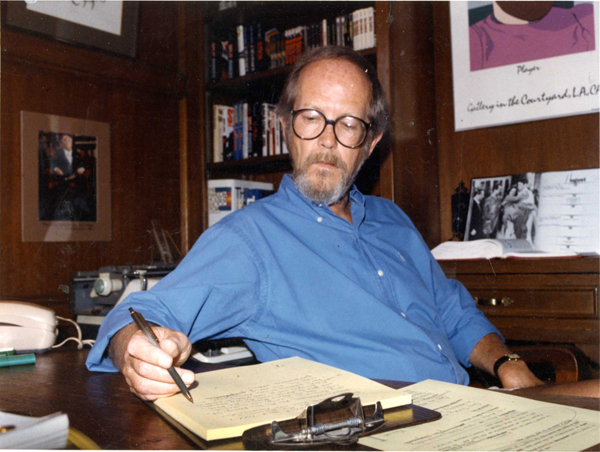
There’s a buffet of salient lessons writers can enjoy from the new biography of crime novelist Elmore Leonard. In this fantastic chronicle of his career in fiction and screenwriting, writers can learn about determination and gutsiness, finding your voice and shedding writer’s block, of sticking up for your own work amid a throng of naysayers and critics. In Cooler Than Cool: The Life and Work of Elmore Leonard ―A Biography of the Master of American Crime Writing by C.M. Kushins, writers can learn how to simplify writing so it’s practically invisible, as his fans have long known reading books such as Rum Punch, 52 Pickup, Get Shorty, and so much more. His dialogue crackles with the gristle of brash reality, imparting on writers the importance of imbuing characters with personalities you can smell, taste, feel. We learn why less is more with Elmore Leonard’s prose. Amid all the many teachable moments in the book, there are two sentiments Leonard shared with the biographer that resonate with me deeply: “Perfect happiness? Having time to practice craft without interruption.” “Don’t talk about what you want to do in life. Do it.” The first maxim should resonate with anyone, not just journalists, who want to excel at what they enjoy doing. It reminds me of what I recently wrote about avoiding those annoying notifications from our phones and computers, reminding us someone wants to steal our attention away from honing our craft. When Leonard sat down to write in his study, as his family bustled around the home, he ensured he had at least three hours of uninterrupted writing time. If that meant getting up at 5 a.m. so be it. It’s that approach to self-discipline and routine I try to instil in my clients when I coach them on cultivating set times to practice their craft, even if it’s just a few hours of free writing. I was thinking recently about Leonard’s writing sessions when I noticed I had been going ot my work-sharing space in Toronto for 10 years. Wow. Ten years of uninterrupted writing time at a desk away from the many distractions and lures of home-working (damn you, Pringles!), ten years of finding my island of concentration and focus. I’m not just waxing poetic here but giving you some practical advice: If you need to get in the zone as a writer or artist, and that circle of silence isn’t available to you at home, find a space where you can cultivate that atmosphere. Talk is cheap, action is worthwhile Leonard’s writing career bestows many lessons on his fans but if there’s one policy he espouses that speaks to me deeply is, “Don’t talk about what you want to do in life. Do it.” How many times have you said what you wanted to accomplish but didn’t follow through? I’ve fallen prey to the “I should” sentiments of self-improvement and finding new ways to express myself through art. And sometimes I follow through, sometimes I don’t, but reading Leonard’s biography reminds me to lean harder into the “I will” protocol of a proverb I’ve held close to my heart since high school. It’s a Buddhist saying, as far as I can research: “There is nothing noble about being superior to another person. The true greatness is in being superior to your previous self.” What Leonard reminds me is the power of being present, in the moment and in tune with the task ahead, and the potency of alone time with your craft. When I have my horse blinders on and only train my attention on the article or poem in front of me, the end result is more successful than when I keep turning to my phone or reddit tabs. Lastly, if you haven’t read Leonard’s books or watched his films, please do. They not only are engrossing and deliciously paced, but they also demonstrate the economy of language, of how we can do more with less writing. If you’re looking for a few of my faves, I’d recommend Get Shorty, Rum Punch and Swag. And if you’re on the prowl for an experienced writing coach, learn more about what I offer and contact me anytime.
What solopreneurs can learn about resiliency thanks to a docu-series on the Tampa Bay Buccaneers
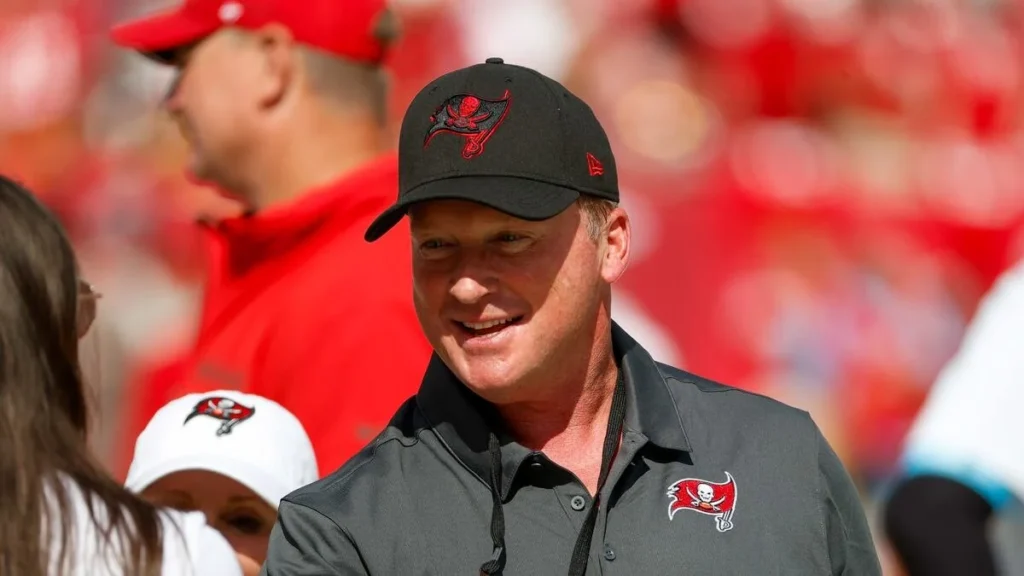
Pound the rock. No risk it, no biscuit. If you follow the NFL, you’ve heard these terms before. And if you follow the Tampa Bay Bucs (like I have, since 1998), then you know these terms come from two of the team’s most formidable coaches, Jon Gruden and Bruce Arians. While I knew about these football strategies when I was watching the Bucs win their Super Bowls in 2003 and 2021, I got a refreshing history lesson on their origin stories when I checked out the new Amazon Prime series Raise the Flags. Tracking the 50-year history of the Bucs, this eight-episode series reminded me of how Gruden preached the “pound the rock” philosophy to inspire his team to win their first Super Bowl. It was enlightening because I was too young to truly understand his take on resilient football back then. But now, I see how it relates to improving myself as a solopreneur. The same goes with Arians’ approach to aggressive play-calling. Be relentless When Gruden was hired to coach the Bucs in 2002, they were a hot mess. Their offense was stagnant despite having a top-tier defense, and they couldn’t close games. They needed a change at the top and Gruden’s hard-nosed focus on grit was just what the Bucs needed. He needed a metaphor to revitalize this struggling team. “Pound the rock!” he demanded from his team. What that meant was grit, adaptability, and accountability. They used the running game to hit the defensive line relentlessly, ensuring their pass game would open up later. On the defensive side, Gruden wanted his all-stars (such as Warren Sapp and John Lynch) to use their strength to bully the other team. Don’t give them an easy down, Gruden said. It came down to this tagline after Gruden made “pound the rock” the slogan for his squad: “If you hit a rock with a hammer 99 times and nothing happens, the 100th blow might finally shatter it.” This idea instantly resonated with me as a freelance journalist and solopreneur. I might not be able to win over an editor with my first pitch. I might have to “pound the rock” and be relentless with finding the right story for that specific news network. I can’t give up when I get that first rejection; if I followed that path, I would have never written 60 articles for BBC News, which weren’t interested in my first three pitches. Also, I “pound the rock” with my marketing initiatives. My first 99 LinkedIn posts may not be as popular as I wanted them to be, or reach the right clientele, but that 100th post just might. I can’t give up simply because something isn’t working (the exception to the rule is when I feel it’s important to pivot away from a strategy that is proven fruitless, as opposed to sticking to something I feel we eventually score with readers). Buckling down and continuing to market yourself is the self-discipline we solopreneurs need to instill into our everyday processes. Great rewards come with great risk I can honestly say I’ve lived a generally conservative life. I’m no daredevil, I don’t leap out of my comfort zone very often, my social vibe could be described as “chill and laissez-faire, with a dash of weirdness.” I’ve always been fine with that characterization until it came time to take a hard look at my freelance writing business. If you’re in the same solopreneur boat as me, we can’t be risk-averse. We have to try some things that might not work at first but, heck, at least we gave it a shot. That’s what Arians told his Bucs team in the early 2020s when he helmed the infamous Tom Brady-led squad that eventually won the Super Bowl. His term, “No risk it, no biscuit,” essentially means you can’t live scared. You can’t be conservative in how you live life or play football. On the field, Arians wanted to ensure his quarterback had two primary reads: one that can pick up a first down (the safe “biscuit”) and one that could end in a touchdown (the “risk”). Arians wanted to see those explosive 20-plus-yard plays. He encouraged his QB to throw long on third down, even if the first-down market was a few yards away. It doesn’t come as a surprise to learn that during his time with the Cardinals and Buccaneers, his quarterbacks (like Carson Palmer, Jameis Winston, and Brady) consistently ranked at the top of the NFL in Average Depth of Target. How does this circle back to my solopreneur journey? I’ve taken more risks and will continue to do so, especially in the realm of client acquisition. I used to think I would only write for news outlets big and small but I decided to branch out with my content marketing programs and PR business, two branches that can be seen as an aggressive move for a long-standing journalist. The reward, the biscuit, has been scrumptious. My revenue has increased, word-of-mouth buzz has spread to other clients, and I feel more fulfilled as a solopreneur. I have interests in more than just covering the news, and I love working with brands I respect and admire. If I never risked it by venturing outside my cozy zone, my bank account would look a lot flatter now. We should all take more long shots. Apply for that grant you don’t think you’ll get. Email that big-time editor running that wildly popular magazine. Approach a source you thought would be off limits. Find a new revenue stream that is outside your circle of familiarity but could nourish you both mentally and financially. Be open to possibilities. If you want to learn more about how I’ve been helping solopreneurs improve their own approaches to running a sustainable business, contact me anytime.
Turn off those Pavlovian bells and focus!
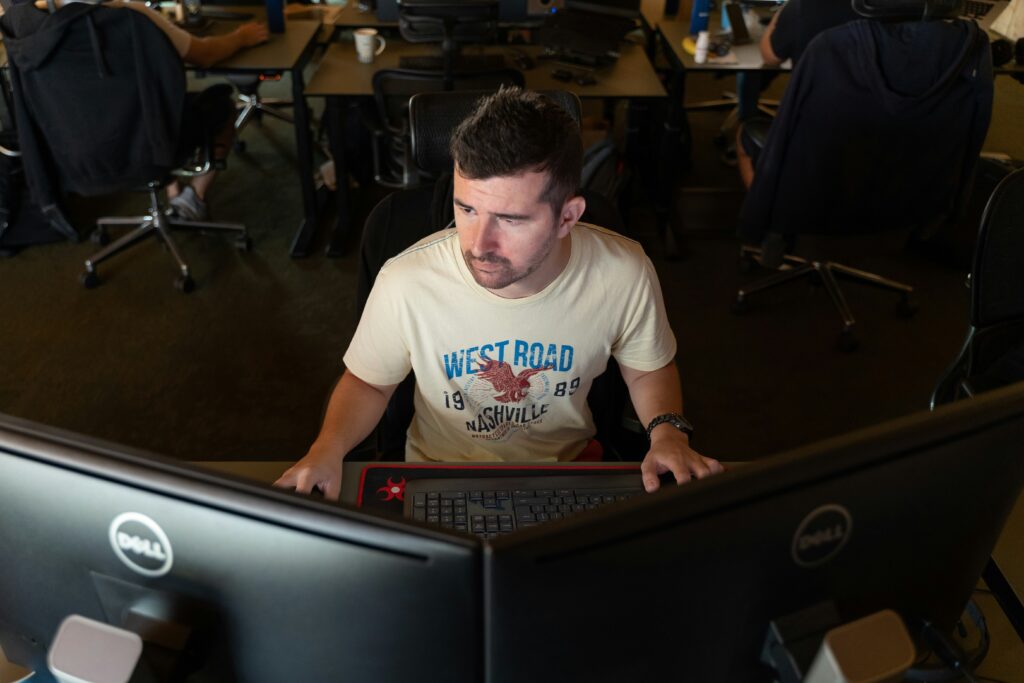
What separates great work from good work? Deep focus. Whether you’re coding a new program or writing a profile for an alumni magazine or copy-editing a start-up’s new site, your attention has to laser in on what needs to be done, distractions be demned. That’s all well and good and Pollyana to believe but the reality is much more of an audio barrage. Pins from texts and blips from Slack messages and Insta DM dings…every Pavlovian bell steering our focus from important work undermines the value-prop of being a solopreneur. We don’t have bosses, we have to manage ourselves, and the flexibility of being able to work anywhere and untethered to the office only encourages us to fine-tune our project management skills. We have an obligation to our clients to invest in uninterrupted sessions of quality writing, in my case. The more we give in to our cellphone’s bells and whistling randomness, the easier it is to procrastinate and lose our path to deep work. Numerous studies have found multi-tasking is hurtful for our productivity. When we switch from one task to another, your attention won’t immediately follow. A “residue” of your attention remains frozen thinking about the previous task. Students should also practice deep concentration. One study found that focused research led to signal transmission, effectively cementing and reinforcing the learning pathway. When you sit down tomorrow morning, silence your phone, turn off haptics (to avoid that inevitable buzzing), toggle off notifications, close any browser tabs unrelated to your work and steer clear of the TV. This is your time to shine on you crazy diamond of a freelancer, so give your client the most polished gem you’ve ever crafted, and revel in the silence of a mind-meld between your ideas, your creativity and the task ahead. Enjoy it while it lasts.
Every solopreneur should find mentors online, offline

When I first embarked on my solopreneur journey as a freelance journalist and content marketing specialist, I foolishly thought I wouldn’t get lonely or uninspired. I thought, I’m an introvert at heart, I like being alone, it’s not a huge deal, and I can inspire myself by listening to podcasts and reading books about freelancing. But lo! I did indeed get lonely, and feelings of inadequacy soon followed. Imposter syndrome often rears its head, but like Anne Lammott recommends, I turned the dial down on those squeaky voices and instead reminded myself I’m successful and skilled at what I do, and so what if someone else I saw on social is securing higher-paying gigs or winning more awards? I then realized something else: Networking is vital for me as a solopreneur. It allows me to learn from others, stave off loneliness and the associated melancholy, and offers me the opportunity to be part of a wider community. I began by networking more on LinkedIn and even Twitter, joining a few Facebook Groups/Pages, as well. This approach helped me learn the frustrating challenges other writers faced, whether that was administrative (“I haven’t gotten paid yet from this magazine!”) or technical (“I’m open to recommendations for high-quality voice recorders for my interviews”). I wasn’t alone here. But still, online is still detached from reality in many ways, and this networking didn’t feel sticky enough, if that makes sense. Recently, I began booking coffee dates with a few longread journalists I admire. These Toronto journos have written poignant and enthralling feature stories that inspire me as a writer, so much so I want to learn their approach to taking on these massive and investigative stories. That’s an area of journalism I haven’t delved into as much as shorter work, but I’d like to see if longread journalism is the right fit for me. I wouldn’t be able to glean that kind of detail with a few back-and-forth emails over LinkedIn. Being engaged and present in the moment of an in-person meeting felt more appropriate for this kind of discussion. I hope to learn from them, too, which editors they tend to pitch to and why, and how they sort through the administrative headaches that sadly make up a big portion of our work. Networking can be awkward or some folks, but I’d recommend swallowing that salty pill and finding the right mentors that can inspire you. It’ll be well worth the effort.
Why every writer needs to be a voracious reader

When I was falling in love with writing as a 17-year-old and enrolled in a mentorship program at the Toronto Public Library, author M.T. Kelly told me, “Dave, writing is reading, reading is writing. You have be as much a bookworm as you are a word nerd.” Those words stayed with me for decades but I worry that too many other writers don’t follow that same advice. I’ve met dozens of writers who don’t read articles beyond the newsletters pushed into their inbox weekly, or the social posts flooding their feeds. That has to change. For any writer, whether creative or journalistic, reading is critical to being a strong writer. We learn from what pulls us into a story, from the phrases that ignite a fire in our brain. When we come across le mot juste, as Baudelaire said, we know we’ll somehow find a way to bring those words into our own writing. Writers have to read a lot. I’m not talking a book a week but at least a couple longreads over that period, maybe a short story collection every month. Read heady complex stuff, read funny poetry, read books you might not even think you’ll like. And it’s fine if you don’t. Forward-thinking writers also learn from what not to do. The more I expanded my reading range, venturing beyond John Irving books to non-fiction and poetry, the more I found beautiful expression I never would’ve spotted in my usual favourites. When we go out of our comfort zooms, we’ll strengthen our writing skills and level up in ways that might have seemed unimaginable before.
Introducing my new PR consulting service to help brands get media attention
I’ve been quietly working with several brands and non-profits over the past couple of years to ensure journalists and editors write about their new products, services or initiatives. I feel like it’s time to not be so quiet about it. As you’ll see on my website, I’ve added a quick explainer on what I do as a PR consultant. I liaise with CEOs, marketing managers and PR agencies to help them write and edit press releases, invigorate their media outreach programs, and train their executives on how to best speak to journalists once a story has been green-lit. While I can’t name specific company names due to NDAs, I’ve worked in sectors such as legal-tech, retail, augmented reality, e-commerce, sustainable pet food, software, SaaS, arts & entertainment, and salon/hairdressing. Media coverage is difficult to attain in this 24/7 breaking-news cycle where companies may struggle to stand out from the competition…or from the Next Big Thing making headlines. But that’s where I come in. When I was editor-in-chief of Digital Journal for more than 13 years, dozens of press releases flooded by inbox, and I quickly had to determine what was a strong hook and what was fit for the SPAM pit. I began to see why certain releases were compelling and why some fell flat. I parlayed that experience into writing engaging press releases for our own projects, such as when we launched our Future of Media conferences at Toronto’s Drake Hotel (where we sold out every quarterly show within hours). As a freelance journalist for the past eight years, I’ve also seen my share of pitches that feed my knowledge of what makes an attractive hook. PR consultancy isn’t an easy task, especially for brands seeking to gain media attention in a saturated market like Toronto. But brand managers have repeatedly told me my understanding of what makes a newsworthy article energizes and inspires them in a way they hadn’t experienced before. This branch of my business is truly rewarding, and I can’t wait to work with more organizations seeking to attract the media attention they want and deserve. If you want to set up a call to learn more about how I can help your business, email me anytime.
Are you learning from rejection?

Being turned down is painful. It doesn’t matter if rejection comes at the hands of a crush, employer or editor, the sting can be as sharp as a scorpion attack. But it’s how you learn from failure that separates the despondent from the successful. As a freelance writer who emails more than 250 pitches a year, I recognize how overwhelming it can be to remain positive amid the No’s and It’s Not Right For Us’s. But the pain lessens over time, like how a stubbed toe can instigate a barrage of cursing but eventually the throbbing ache subsides. So does hearing from an editor who rejects a pitch. But if you read between the emailed lines, you can uncover ways to lessen the chances of being turned down next time. Editors may reply to a query with, “This doesn’t work for our audience/readership.” If they don’t share any more details, figure out if your pitch was truly tailored to that news network’s audience or if you didn’t dig deep enough into the outlet to discern what made this audience unique. Remember, a pitch for BBC News will be vastly different than one for Scientific American. I have also read rejections that told me I hadn’t found a strong news hook. I knew the story was intriguing, the characters were compelling, but I hadn’t convinced editors that this article had to be written now. Going back to the drawing board isn’t entirely necessary; rather, I found some timely studies or reports to strengthen the revised pitch, and if I recall correctly, more often than not the updated pitch would be more appealing to editors and encourage more commissions. Finally, is the idea meaty enough? If an editor doesn’t say so, review the rejected pitch and spot areas that were scant on details or light on statistical evidence to bolster your theory or theme. That doesn’t mean you have to add another 300 words to the pitch. More likely, you need to fill in a few blanks to carry the pitch over the finish line. If you have more questions about to successfully pitch editors and level up your freelance business, contact me anytime or learn more about my coaching programs.
Why I’m not worried about AI tech coming for my job

The hand-wringing is so prevalent I can practically hear the anxious breathing, the knuckles cracking, the flurry of keystrokes to fine-tune that dusty CV. Journalists are worried about AI encroaching on their livelihood, especially in the light of 2022 headlines about CNET employing AI systems to pen articles. Watch out, writers, AI is coming for you! these alarmists cry from the rooftops. Generative AI systems are poised to push me out of my journalist roost and take over editorial control to cut costs for weary publishers seeking any way to recoup long lost revenue. But I contend AI tech isn’t the saviour some media players see it to be. First, let’s be honest about something: Journalists don’t always see AI as a threat but as a complementary tool to leverage. An Associated Press survey published in April 2024 asked journalists about the use of generative artificial intelligence in their work. Nearly 70% of those who replied said they had used this technology to generate text, whether it was composing article drafts, crafting headlines or writing social media posts. Not all of us are holding up crucifix-fingers to ward off this demonic innovation. No, some of us see value in how generative AI can invigorate parts of our work, such as transcription, that we truly despite doing, and often outsource to third-party businesses anyway. So now to the main contentious issue: Should I be worried editors will choose AI systems over my own writing? Based on what I do for editors, no, I’m not losing sleep. Perhaps other writers who tackle general news reports or sports recap pieces or economic updates, they might wonder if their careers are going to plummet in the next few years. What I do for editors is something current systems can’t replicate with style and personality: compelling profiles of business leaders and artists and social activists that often are peppered with humour and unique ledes and endings. I also love writing in-depth feature reports that oscilate between time periods and engaging characters, dripping with panache and colour and details that a tech system solely off-site can’t imitate. They don’t know have intimate knowledge of interviewees met in person, from speech patterns to body language to what deodorant they’re wearing. Editors, and readers, crave those details to immerse inside a feature story. AI systems aren’t at that level yet. What I also do is write brand copy relevant to the tone and voice of the business. Yes, AI tech is stronger in this area than what I just noted above, but the words I’ve read by generative AI is so stilted and bland, with barely any style or charm. Brands might want the easiest and cheapest way to launch content marketing campaigns, but if they are solely drive by AI-written content, expect eyes to glaze over as if they’re watching C-SPAN at 4 a.m. Finally, I coach writers through my Become a Better Writer 1-on-1 programs, which AI chatbots can’t accompish efficiently. Because I tailor these workshops and exercises with a writer’s specific needs, I’m catering to their interests, not just applying a template to their projects. AI is light-speed excellent at finding random tips on writing from its source material, but can it guide a 55-year-old freelance journalist in Calgary to find story ideas specific to their communities? AI and LLMs aren’t going anywhere, so journalists and editors have to learn to live with them. But they also shouldn’t viscerally feel dejected at their rise across the industry, as the more creative of us will recognize how our value supersedes whatever Sam Altman throws our way.