Forget LinkedIn, Substack. Your own site should be your online HQ

Freelance writers need their own websites. Solopreneurs and independent contractors need their own sites. The same protocol applies to gig workers and hobbyists with a side hustle. This is a hill I’ll die on. Too many of us rely on networks such as LinkedIn, Substack and Medium to host our shortform posts, our longform Op-Eds, our services, the odd content marketing campaigns. But why play by everyone else’s rules when you can make your own? When you craft and maintain your own site to promote yourself as a writer, you won’t face any surprises. When you solely post on LinkedIn, for example, their algorithm can suddenly pivot one day and the kind of content you produce could sink. We saw that pattern appear with Facebook’s constant Main Feed tweaks. The same with X. But when you write blog posts on your site, you can curate the branding and positioning ideal for what you offer clients. There’s a relieving freedom moving from Medium to your own site (my story, in a nutshell) thanks to stressing less about platform updates and changes affecting your content. Let’s be blunt, though. Running your own site takes time and income, so it’s a decision you’ll have to make when you survey your budget. But it’s a line item worth highlighting, and it can pay dividends. I estimate I’ve received around 20 emails through my website in the past year, most of them inquiring about my writing coaching services. With Medium, would I be fielding similar DMs or finding comments on my posts, asking for my rates? I doubt it. It never happened. So three years ago, I cut my losses with my investment of posting on Medium and focused more on my own lead-generating site. I’d recommend working with a designer or UX specialist to fine-tune what you want your site to do. Promote one nuance of your freelance business? Flush out your blog more than your portfolio? Go heavy on multimedia and remain lean with text-heavy design? As dizzying as the options are, thy represent a blank canvas; go paint the mural of your business, and recognize your ink isn’t permanent. You can shift your site’s intention any time. My next post will share my advice on how to maintain your site and make it “sticky,” meaning visitors will want to come back to it over and over again.
The biography of crime novelist Elmore Leonard inspired me with these two compelling quotes
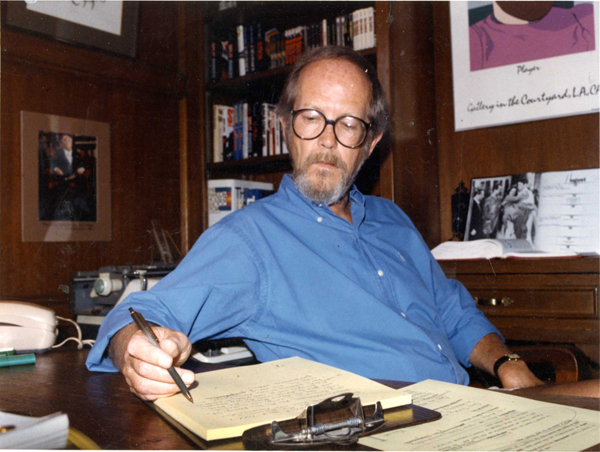
There’s a buffet of salient lessons writers can enjoy from the new biography of crime novelist Elmore Leonard. In this fantastic chronicle of his career in fiction and screenwriting, writers can learn about determination and gutsiness, finding your voice and shedding writer’s block, of sticking up for your own work amid a throng of naysayers and critics. In Cooler Than Cool: The Life and Work of Elmore Leonard ―A Biography of the Master of American Crime Writing by C.M. Kushins, writers can learn how to simplify writing so it’s practically invisible, as his fans have long known reading books such as Rum Punch, 52 Pickup, Get Shorty, and so much more. His dialogue crackles with the gristle of brash reality, imparting on writers the importance of imbuing characters with personalities you can smell, taste, feel. We learn why less is more with Elmore Leonard’s prose. Amid all the many teachable moments in the book, there are two sentiments Leonard shared with the biographer that resonate with me deeply: “Perfect happiness? Having time to practice craft without interruption.” “Don’t talk about what you want to do in life. Do it.” The first maxim should resonate with anyone, not just journalists, who want to excel at what they enjoy doing. It reminds me of what I recently wrote about avoiding those annoying notifications from our phones and computers, reminding us someone wants to steal our attention away from honing our craft. When Leonard sat down to write in his study, as his family bustled around the home, he ensured he had at least three hours of uninterrupted writing time. If that meant getting up at 5 a.m. so be it. It’s that approach to self-discipline and routine I try to instil in my clients when I coach them on cultivating set times to practice their craft, even if it’s just a few hours of free writing. I was thinking recently about Leonard’s writing sessions when I noticed I had been going ot my work-sharing space in Toronto for 10 years. Wow. Ten years of uninterrupted writing time at a desk away from the many distractions and lures of home-working (damn you, Pringles!), ten years of finding my island of concentration and focus. I’m not just waxing poetic here but giving you some practical advice: If you need to get in the zone as a writer or artist, and that circle of silence isn’t available to you at home, find a space where you can cultivate that atmosphere. Talk is cheap, action is worthwhile Leonard’s writing career bestows many lessons on his fans but if there’s one policy he espouses that speaks to me deeply is, “Don’t talk about what you want to do in life. Do it.” How many times have you said what you wanted to accomplish but didn’t follow through? I’ve fallen prey to the “I should” sentiments of self-improvement and finding new ways to express myself through art. And sometimes I follow through, sometimes I don’t, but reading Leonard’s biography reminds me to lean harder into the “I will” protocol of a proverb I’ve held close to my heart since high school. It’s a Buddhist saying, as far as I can research: “There is nothing noble about being superior to another person. The true greatness is in being superior to your previous self.” What Leonard reminds me is the power of being present, in the moment and in tune with the task ahead, and the potency of alone time with your craft. When I have my horse blinders on and only train my attention on the article or poem in front of me, the end result is more successful than when I keep turning to my phone or reddit tabs. Lastly, if you haven’t read Leonard’s books or watched his films, please do. They not only are engrossing and deliciously paced, but they also demonstrate the economy of language, of how we can do more with less writing. If you’re looking for a few of my faves, I’d recommend Get Shorty, Rum Punch and Swag. And if you’re on the prowl for an experienced writing coach, learn more about what I offer and contact me anytime.
6 lessons I learned after 6 years of working as a full-time freelance writer

Learning to say no. Hustling non-stop. Negotiating like a boss. These are some of the takeaways from my past six years of excelling as a freelance journalist.
5 things I wish I knew when I started freelancing
Find out the truisms and practices I wished I followed when I first started working as a freelance journalist