Freelance Journalists: What you should do (and not do) after you send your pitch to editors

Once you click SEND on your emailed pitch to an editor, relief washes over your bones and you unclench your jaw. Done and done! But are you, really? In one sense, sure. You just sent a pitch for a story idea that fills you with such confidence, you even told your parents you might get published in Wired in a couple months. Based on my 20+ years in journalism, I’ve come to realize my work isn’t over once I’ve sent off the pitch to an editor. If I don’t get a reply within a week, I should be proactive. I need to ensure I follow up on each pitch, tracking when I sent a reminder email, and analyzing which types of ideas have attracted the most commissions. Track and feel it out When I coach students in my Become a Better Writer courses, I suggest they track their journalism pitches in a cloud-friendly database, such as Google Sheets. They should include fields for date sent, story idea, publication, editor’s name and email, if accepted, and one more important field—followed up or not? Let’s be straight up about editors: They aren’t opening your pitch the day you send it, and most likely they will only get to it a week or two from reception. That means you can’t expect quick turnarounds with editors at the more prestigious pubs, which may often take a month or two to net a reply. Still, editors expect a nudge email. That email reminds editors about your idea that you sent X days or weeks ago. It’s as short as possible, and never goes over the same idea that you already passed along. Use the same thread as the sent email so the editor just has to scroll up to read the pitch. In that followed-up field, I’ll write the date of the nudge email. I generally wait a week for most outlets, and two weeks for the higher-paying ones, such as The Walrus or Toronto Life. But wait, you declare, what should I write in this nudge email? Keep it Simple and Short For starters, I’m not looking to drag the editor into paragraphs of woe-is-me rants on how this timely story has to be developed ASAP; I’m just here to lightly poke the editor into reading my first email. The text of my nudge email usually reads: Hi ____, I’m the freelance journalist who sent you this pitch two weeks ago, and I’m wondering if you had a chance to read it recently. I look forward to your reply. Best, David Silverberg Boom, that’s it! Nothing more, nothing less. That kind of pithiness can be enough for an editor to scoot up his cursor to find the original pitch, give it a read then, and reply to me within the hour. It’s happened. And you might be curious what my success rate for nudge emails have been. I’ve only started tracking these emails in the past five years, so anecdotally over my career I estimate around half of my follow-ups have elicited a reply, a yay or nay, and of those, around a third were greenlit. The lesson here is that if I never sent those nudge emails, my pitch may remained in the slush pile, forever to be leapt over by fresher pitches that, for some reason, caught the editor’s attention immediately. There’s no reason why certain pitches get accepted within the week or within the season. Well, the editor will know why she’s not replying to you ASAP, but you’re not privy to that info, so rest assured that most editors will reply to you in some way…at some point. Nudge emails take minimal effort and planning, demonstrate your professionalism to editors, and ease your anxious thoughts circling around if that editor will get back to you about your gold-star idea. But wait one more minute, oh fearless writing coach! What say you to TWO nudge emails? To that I say, go for it, but I usually end it at one email. If I don’t get a reply to that message, I don’t pester the editor, and instead assume the idea was turned down and the editor didn’t or forgot to reply to me. There’s no harm in sending a second email, but I can gauge when an editor or a pub is interested in a story, and when it’s time to move on. To that end, too, I’d suggest assessing your accepted and rejected pitches once a year, while also tracking which editors needed that nudge email to yield a reply. That way, you can have a solid view of the kinds of ideas winning favour. You can then determine which editors have been most lax in getting back to you in that first email, and remind yourself to continue to send nudge emails to those editors, especially. If you have questions about pitching as a journalist, contact me anytime, or check out the writing courses I’ve made available to freelance journalists of any level.
How freelance writers can better manage the scourge of rejection

Your pitches will be rejected. No one bats 1000. So how will you recover from that feeling and rebound to freelance another day?
Inside the 5 challenges every freelance writer faces

Negotiating higher rates. Evading imposter syndrome. Instilling self-discipline. These are some of the challenges you’ll endure as a freelance writer, and in this week’s post I want to help you overcome them.
My published work in October/November 2021

From long-running Halloween stores in Toronto to the rise of carbon labels, my portfolio was impressively varied in the past few months.
The secret to earning $1/word as a freelance journalist? Alumni magazines!

If you want to earn more as a freelance writer, search for those sweet $1/word gigs, such as writing profiles for alumni magazines.
Why turning down jobs can benefit your freelance writing career

In this post, I break down the various reasons why freelance journalists may want to pass on gigs and instead focus on more enriching opportunities.
My published work in May/June 2021

Find out how I researched, pitched and worked on several intriguing articles in May and June.
What Agatha Christie can teach you about developing characters with just one sentence

In this post, I reveal the one line from Christie’s Nemesis that every writer should emulate.
My March/April 2021 journalism and brand work

From Big Data in real estate to predicting where smartphone camera lens technology is heading, I tackled a range of intriguing subjects in the past two months. Isn’t that a key appeal of becoming a freelance writer? Monday’s not like Tuesday, and every week delivers chewy education on whatever topic I’m writing about for my clients. Where can you find my recent work? See below: So You Want To Write? – 6 Ways Being a Journalist Made me a Better Creative Writer For this Canadian blog portal on creative writing, I wanted to share my two passions–journalism and poetry–so other folks in my position can recognize the special opportunity they have. I’ve long regarded journalism as an excellent workshop facilitator for my creative side, and now I was finally able to write about that syncing in a post I may riff off down the road in a deeper longread. Toronto Star – Moses Znaimer’s impressive TV collection Definitely the field reporting highlight of the month, this article asked me to visit Toronto’s Museum of Television, curated by TV impressario Moses Znaimer. I never thought I’d be so fascinated by 60-year-old TVs, but there I was, scribbling down notes as my jaw cartoonishly dropped at some of the iterations that could’ve come out of an Isaac Asimov novel. I hope the fun I had learning about the history of TVs came through in the feature article. BBC News – Smaller and better smartphone cameras are on the way This assignment brought me back to my Digital Journal roots, where I reported on hard tech and digital trends for more than 15 years. I never got too inside-baseball with smartphone camera lenses, though, and this BBC News article gave me a deeper dive into an area of the smartphone that will look and behave very differently five years from now. Local Logic – 7 Ways Data is Energizing the Real Estate Industry As a Deloitte report found, many tech startups venturing into real estate could energize an industry in dire need of modernization. That’s what the got the ball a-rollin for my latest work for Montreal startup Local Logic. Since beginning my contract with them in January, I’ve learned so much about data and real estate, I could write an e-book tomorrow. This is just a glimpse of several avenues I went down, and be on the lookout in the summer for a new series I’m writing for them on the future of cities. ATB – Learning from David Knight Legg at the 2021 Alberta Economic Summit Another round of brand work for ATB saw me cover a recent talk by the CEO of Invest Alberta, so if you’re curious about the Albertan economic landscape and what lies ahead (and who isn’t, really?), then click the link above. Toronto Star – Profiling Toronto’s oldest Jewish congregation, Holy Blossom Temple Another callback to my roots, this Star article had me visiting a synagogue I know from my youth, since I went to Hebrew school around the block from Holy Blossom Temple. It was a treat to see the renos up close and learn about the history and culture of the shul. I also really adore the photos the Star photographer shot for this one.
Watch my webinar on freelance journalism and landing clients
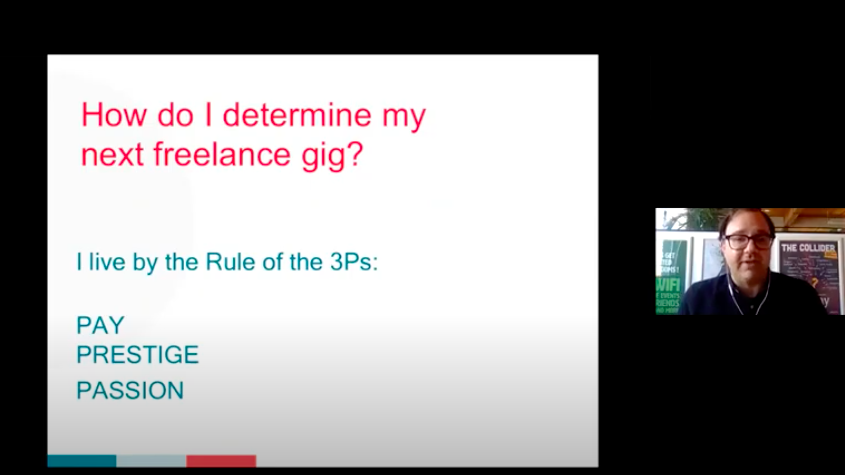
Check out this free webinar I produced for my work-sharing space, focusing on the strategies I bring to my freelance journalism career.